The Spurs, who despite their first round exit were one of the best teams in the NBA last season, are primed to even better this year.
They're well on their way to locking up reigning-Defensive-Player-of-the-Year Kawhi Leonard with a max contract, they signed one of the best free agents on the market in LaMarcus Aldridge, who's averaged over 20 points and 10 rebounds the last three seasons, and Tim Duncan, who's old as hell yet can still play at a high level, will be back for at least one more season. All this before Manu Ginobili also decided to stave off retirement for a little longer as well.
In addition to that, they just signed David West, who was a potential second option if they couldn't close the deal on Aldridge. Now they have both of them, getting their cake and eating it in the process.
To recap: the Spurs will trot out their old big-three for at least one more year (Duncan and Ginobili will likely be signed to one-year deals on the cheap and Tony Parker is singed through 2018) and will also have a new big-three in Leonard, Aldridge and Danny Green to lead them into the post-Duncan wilderness when that time finally comes. Plus, Gregg Popovitch will coach out his contract which lasts until 2019. Simply put, one of the best teams on both ends of the court got better and will likely remain that way until at least the end of the decade.
Now how do the Spurs stack up against the rest of the Western Conference?
Starting with the 2014 playoff teams:
Golden State Warriors
Their only free agent that contributed significant minutes last season, Draymond Green, resigned with the team that has the rest of the core locked up for the next few years. They'll be formidable once again next season, though time will tell if they'll miss Alvin Gentry's offensive scheme (Gentry now coaches the New Orleans Pelicans).
Houston Rockets
Their core is locked up as well and they're likely to be good again as well. The Warriors and Rockets represent the Spur's greatest challenge in making it to the Finals.
Los Angeles Clippers
Here's where things get interesting. The team that knocked the Spurs out of the playoffs got significantly worse. They lost DeAndre Jordan to the Mavericks, meaning a team that worked its starters to the bone will not have a guy who averaged double-digit rebounds the last two seasons. Plus, they still haven't fixed their lack of depth. They're probably still a playoff team thanks to Chris Paul and Blake Griffin, but they'll be lucky if they make it out of the first round.
Portland Trail Blazers
In addition to losing Aldridge, they also lost Wesley Matthews to the Mavericks and Robin Lopez to the Knicks. The Blazers have Damian Lillard and not much else now. They're likely not even a playoff team next year.
Memphis Grizzlies
They'll still be a hard-nosed tough team, but depth will now be an issue having lost Kosta Koufos, one of the best backup centers in the game, to the Sacramento Kings. Also, shooting is still an issue.
Dallas Mavericks
The Mavericks got better with the additions of Jordan and Matthews mentioned above, though they're still in the bottom tier of playoff-caliber teams in the West. In the next few seasons they'll probably be pretty formidable, but not this season.
New Orleans Pelicans
Thanks to a tiebreaker with the Thunder, the Pelicans made the playoffs last season. With Anthony Davis locked up for the rest of the decade, it's up to Alvin Gentry to fix a defense which was in the bottom ten in terms of efficiency. If he can improve the defense then the Pelicans will definitely be an under-the-radar dangerous team, though good enough to advance past the second round.
And the Rest
The Thunder are sure to return to their playoff form with Kevin Durant likely being healthy again. Though aside from Durant and Russell Westbrook, the team doesn't seem as imposing as has in the past (the Thunder are in a watered-down version of what plagues the Clippers with a suspect bench, but it's not as grave as it is in LA).
The Jazz and the Suns will be fun teams vying for the last couple playoff spots, but neither of them are serious threats. That leaves the Nuggets, Kings, Lakers and Timberwolves, all of whom will be dreadful for at least one more season (though the Nuggets have a chance to improve to mediocre if Mike Malone is a wizard).
***
In conclusion, the moves the Spurs have made in the last month and particularly the last few days will push them to the top of the tougher conference in the NBA. Only the Warriors, Rockets and MAYBE the Thunder pose a threat to them. But the Spurs have to be considered the favorites to make it out of the West and win their six championship in franchise history.
Monday, July 6, 2015

Tuesday, June 16, 2015
MAN, LEBRON WAS AWESOME, BUT THE WARRIORS WERE AWESOMER
The Golden State Warriors are the NBA champions for the first time in 40 years.
For pretty much every year after that 1975 title they were an utter joke of a franchise. They wasted Chris Mullin, broke up Run TMC too damn early, and won a scant 42.8 percent of their games in the 35 years after 1975. For more detail, from 1976 to 2010 the Warriors had 11 winning seasons, went to the playoffs eight times and made past their first series six times, with only two of those coming after 1990.
Under Mark Jackson, the Warriors became a fun good team while Stephen Curry became perhaps the greatest three-point shooter in NBA history. But under Steve Kerr the Warriors became great.
Curry broke his own three-pointers-made record. Klay Thompson and Draymon Green came into their own, while Andre Iguildala and David Lee went to the bench. The Warriors led the league in defensive rating (points allowed per every 100 possessions) and only trailed the Clippers in offensive rating (points scored per every 100 possessions) by 0.8 points.
They were damn near unstoppable at home, losing only four games at Oracle Arena all season, playoffs included. Only the 1985-86 Celtics had a better home record. At one point, they won 16 games in a row. Since the 2003 postseason, when the NBA upgraded the first round from a best of five to a best of seven, only the 2006-07 Spurs had a better postseason record (16-4). The Warriors' 16-5 record in the playoffs was matched only by the 2010-11 Dallas Mavericks in the last 13 seasons.
Point is, this Warriors team was fantastic in every conceivable way and will likely go down as one of the best in NBA history.
Only the Grizzlies and Cavaliers gave the Warriors any real trouble in the playoffs, with the Cavs being particularly notable. The Cavs lost Kevin Love after the first round thanks to Kelly Olynyk, and Kyrie Irving, who had been hobbled for most of the playoffs, injured his knee in Game 1 of the Finals. Under those circumstances, the fact that the Cavs took two wins away from a team that will go down as one of the best ever is nothing short of remarkable. And most of that is thanks to LeBron James.
LeBron was simply astounding in these Finals- he averaged 35.8 points, 13.3 rebounds and 8.8 assists in the six games while playing 274 of the total 298 minutes these Finals lasted (45.7 minutes per game). If anyone besides Andre Iguodala (who was great offensively and defended LeBron like a champ) deserved to win Finals MVP, it was James. The only player in the last 30 years to put up a line that good in a Finals loss that went to at least six games is Charles Barkley in 1993 (27.3 points, 13 rebounds, 5.5 assists, per game) and LeBron's 2015 Finals line blows Barkley's out of the water.
LeBron looked exhausted after Game 6, and it makes sense why. Take LeBron off the Cavs, and as Jeff Pearlman tweeted, you have the Knicks. David Blatt only seemed to trust seven players besides LeBron and not counting Kyrie Irving all series - Matthew Dellavedova, James Jones, Timofey Mozgov, Iman Shumpert, J.R. Smith and Thristan Thompson, with Mike Miller coming in as a desperation reserve late in the run. That lineup played great defense, but offensively they're pretty scatter shot. The two wins in the Finals for the Cavs resulted in guys like Delly playing beyond their means offensively (though Mozgov had a great all-around series and Smith was invaluable when he got on a hot streak).
Even if Love and Irving were healthy, the Warriors would still likely have won (though it probably would've gone the full seven in that scenario). But with Love likely resigning in Cleveland and Irving back next season, this Cavs team is the favorite to make it out of the East once again in 2016.
But speaking of going back to the Finals, the Warriors are primed to be good for a long time. GM Bob Myers has already said that he has permission to match any offer Draymond Green receives in restricted free agency this summer, and the other key players on the team are all under contract for the next two seasons at least. Who knows, maybe we'll see both of these teams face off again a year from now.
For pretty much every year after that 1975 title they were an utter joke of a franchise. They wasted Chris Mullin, broke up Run TMC too damn early, and won a scant 42.8 percent of their games in the 35 years after 1975. For more detail, from 1976 to 2010 the Warriors had 11 winning seasons, went to the playoffs eight times and made past their first series six times, with only two of those coming after 1990.
Under Mark Jackson, the Warriors became a fun good team while Stephen Curry became perhaps the greatest three-point shooter in NBA history. But under Steve Kerr the Warriors became great.
Curry broke his own three-pointers-made record. Klay Thompson and Draymon Green came into their own, while Andre Iguildala and David Lee went to the bench. The Warriors led the league in defensive rating (points allowed per every 100 possessions) and only trailed the Clippers in offensive rating (points scored per every 100 possessions) by 0.8 points.
They were damn near unstoppable at home, losing only four games at Oracle Arena all season, playoffs included. Only the 1985-86 Celtics had a better home record. At one point, they won 16 games in a row. Since the 2003 postseason, when the NBA upgraded the first round from a best of five to a best of seven, only the 2006-07 Spurs had a better postseason record (16-4). The Warriors' 16-5 record in the playoffs was matched only by the 2010-11 Dallas Mavericks in the last 13 seasons.
Point is, this Warriors team was fantastic in every conceivable way and will likely go down as one of the best in NBA history.
Only the Grizzlies and Cavaliers gave the Warriors any real trouble in the playoffs, with the Cavs being particularly notable. The Cavs lost Kevin Love after the first round thanks to Kelly Olynyk, and Kyrie Irving, who had been hobbled for most of the playoffs, injured his knee in Game 1 of the Finals. Under those circumstances, the fact that the Cavs took two wins away from a team that will go down as one of the best ever is nothing short of remarkable. And most of that is thanks to LeBron James.
LeBron was simply astounding in these Finals- he averaged 35.8 points, 13.3 rebounds and 8.8 assists in the six games while playing 274 of the total 298 minutes these Finals lasted (45.7 minutes per game). If anyone besides Andre Iguodala (who was great offensively and defended LeBron like a champ) deserved to win Finals MVP, it was James. The only player in the last 30 years to put up a line that good in a Finals loss that went to at least six games is Charles Barkley in 1993 (27.3 points, 13 rebounds, 5.5 assists, per game) and LeBron's 2015 Finals line blows Barkley's out of the water.
LeBron looked exhausted after Game 6, and it makes sense why. Take LeBron off the Cavs, and as Jeff Pearlman tweeted, you have the Knicks. David Blatt only seemed to trust seven players besides LeBron and not counting Kyrie Irving all series - Matthew Dellavedova, James Jones, Timofey Mozgov, Iman Shumpert, J.R. Smith and Thristan Thompson, with Mike Miller coming in as a desperation reserve late in the run. That lineup played great defense, but offensively they're pretty scatter shot. The two wins in the Finals for the Cavs resulted in guys like Delly playing beyond their means offensively (though Mozgov had a great all-around series and Smith was invaluable when he got on a hot streak).
Even if Love and Irving were healthy, the Warriors would still likely have won (though it probably would've gone the full seven in that scenario). But with Love likely resigning in Cleveland and Irving back next season, this Cavs team is the favorite to make it out of the East once again in 2016.
But speaking of going back to the Finals, the Warriors are primed to be good for a long time. GM Bob Myers has already said that he has permission to match any offer Draymond Green receives in restricted free agency this summer, and the other key players on the team are all under contract for the next two seasons at least. Who knows, maybe we'll see both of these teams face off again a year from now.
Friday, May 15, 2015
SERIES LOSS BRINGS UNCERTAINTY TO BULLS
I picked the Cleveland Cavaliers to go to the NBA Finals, but one potential series that gave me pause was a match up against their division rivals, the Chicago Bulls. This season's Bulls team was more poised to make a deep playoff run than any Bulls team since 2011. Not coincidentally, this was the first season since the Bulls went to the Eastern Conference Finals in 2011 that Derrick Rose was largely healthy.
Rose's injury woes are well documented. He missed much of the the 2011-12 season due to injuries and tore his left ACL in the Bulls' first game of the playoffs. He missed the entire 2012-13 season, and played in only ten games the next season before tearing his meniscus in his right leg. All in all Rose missed 197 games over those three seasons, but he managed to play 51 this season even after re-injuring his right meniscus.
Rose averaged 17.7 points, 4.9 assists and 3.2 rebounds this season- a far cry from his MVP season, but still very good for a Bulls team that regressed defensively compared to years past. A healthy Rose, in addition to a breakout season from Jimmy Butler, an All-Star return to form for Pau Gasol, and a typically feisty campaign for Joakim Noah, plus a good bench with guys like Taj Gibson, Aaron Brooks, Kirk Hinrich and rookie Nikola Mirotic made this team a real threat come playoff time.
If any team was going to knock off the Cavaliers, it was these Bulls. And they had a lot going for them- Kevin Love dislocated his shoulder against the Celtics and was ruled out for the rest of the playoffs. Kyrie Irving was also banged up going into the series. J.R. Smith was suspended for the first two games of the Bulls series after hitting the Celtics' Jae Crowder in the head. And again, this Bulls team was healthy for really the first time since 2010-11.
But even with all of those advantages, the Cavs still came away with a series victory in six games.
The Bulls only had one convincing win over the Cavs in the whole series- their 99-92 Game 1 victory. Game 3 and 4 ended after last-second baskets that were, for all intents and purposes, lucky shots, and were otherwise even games that either team could've won. That leaves the other three games, which the Cavs won in convincing fashion.
I'm not about to say that this was a shameful series loss. After all, LeBron James is really, really damn good. But while James is phenomenal, again, he's one guy. And also again, the Cavs' version of the Big Three was down to one-and-a-half for pretty much this whole series. And also, also again, the Bulls, by contrast were healthy for the most part (injuries to Pau Gasol not withstanding).
And, unfortunately, that also leads to speculation about the future of Bulls coach Tom Thibodeau. In case you've been living under a rock for the last year or so, Thibodeau and Bulls' management have been involved in a rather public pissing contest with each other.
Management isn't happy about Thibs' prickly personality and his inability lighten up as far as working his players into the ground goes. Thibs' isn't happy, because he's been successful and those front office guys can go piss up a rope for all he cares.
And Thibs has every right to feel like his system is working- before he was hired, the Bulls were a complete mess. They went through four coaches from 1998 to 2010. They had a whopping two winning seasons in that same stretch. In that era's five postseason appearances, they advanced past the first round once.
With Thibs' arrival, the Bulls went from winning 39% of their games since their 1998 championship, to winning 64.7% of them in his full five seasons on the job. Like him or not, Thibs has made the Bulls one of the best teams in the NBA year in, year out. And this includes seasons where their best player missed 80% of his games in three years. But conversely, the front office deserves credit for drafting players like Rose, Noah, Butler and Gibson, to name a few, in the last decade to bring the Bulls back to relevancy.
Thibs is undeniably a good coach, but it is fair to question whether he's taken the Bulls as far as he, personally, can take them. They were so good defensively in the past, finishing second, first, third and first in opponent's points per game in Thibs' first four seasons, before dropping down to ninth this season. Obviously, finishing in the top ten defensively is still a major accomplishment, but that drop is disconcerting nonetheless.
The Bulls just seemed tired. Were they beginning to tune out Thibs, who has a well-deserved reputation for being a hard ass? They certainly seemed to in Game 6. After scoring 31 points in the first quarter, they only scored 42 the rest of the game, while losing to the Cavs by 21, the biggest margin of victory in this series for either team. All while on their home court in an elimination game. While Rose, Noah and Gibson all had Thibs' back after the loss, their and the rest of the team's actions sure spoke louder than words in that game, and really, the whole season.
I would be very surprised if Thibs was back in Chicago come October. I mean, hard ass coaches feuding publicly with the team's front office no longer being there the next year despite great success- where have I heard that before? I don't know who the Bulls would replace him with, but given the success of the Golden State Warriors this season under rookie-coach Steve Kerr, after firing player-favorite Mark Jackson, they're probably willing to try. Also, they really, really seem to want to get Thibs out the door as soon as possible.
I have no idea what the Bulls will look like next season or who will be coaching them. The uncertainty is the only guarantee for them all summer.
Rose's injury woes are well documented. He missed much of the the 2011-12 season due to injuries and tore his left ACL in the Bulls' first game of the playoffs. He missed the entire 2012-13 season, and played in only ten games the next season before tearing his meniscus in his right leg. All in all Rose missed 197 games over those three seasons, but he managed to play 51 this season even after re-injuring his right meniscus.
Rose averaged 17.7 points, 4.9 assists and 3.2 rebounds this season- a far cry from his MVP season, but still very good for a Bulls team that regressed defensively compared to years past. A healthy Rose, in addition to a breakout season from Jimmy Butler, an All-Star return to form for Pau Gasol, and a typically feisty campaign for Joakim Noah, plus a good bench with guys like Taj Gibson, Aaron Brooks, Kirk Hinrich and rookie Nikola Mirotic made this team a real threat come playoff time.
If any team was going to knock off the Cavaliers, it was these Bulls. And they had a lot going for them- Kevin Love dislocated his shoulder against the Celtics and was ruled out for the rest of the playoffs. Kyrie Irving was also banged up going into the series. J.R. Smith was suspended for the first two games of the Bulls series after hitting the Celtics' Jae Crowder in the head. And again, this Bulls team was healthy for really the first time since 2010-11.
But even with all of those advantages, the Cavs still came away with a series victory in six games.
The Bulls only had one convincing win over the Cavs in the whole series- their 99-92 Game 1 victory. Game 3 and 4 ended after last-second baskets that were, for all intents and purposes, lucky shots, and were otherwise even games that either team could've won. That leaves the other three games, which the Cavs won in convincing fashion.
I'm not about to say that this was a shameful series loss. After all, LeBron James is really, really damn good. But while James is phenomenal, again, he's one guy. And also again, the Cavs' version of the Big Three was down to one-and-a-half for pretty much this whole series. And also, also again, the Bulls, by contrast were healthy for the most part (injuries to Pau Gasol not withstanding).
And, unfortunately, that also leads to speculation about the future of Bulls coach Tom Thibodeau. In case you've been living under a rock for the last year or so, Thibodeau and Bulls' management have been involved in a rather public pissing contest with each other.
Management isn't happy about Thibs' prickly personality and his inability lighten up as far as working his players into the ground goes. Thibs' isn't happy, because he's been successful and those front office guys can go piss up a rope for all he cares.
And Thibs has every right to feel like his system is working- before he was hired, the Bulls were a complete mess. They went through four coaches from 1998 to 2010. They had a whopping two winning seasons in that same stretch. In that era's five postseason appearances, they advanced past the first round once.
With Thibs' arrival, the Bulls went from winning 39% of their games since their 1998 championship, to winning 64.7% of them in his full five seasons on the job. Like him or not, Thibs has made the Bulls one of the best teams in the NBA year in, year out. And this includes seasons where their best player missed 80% of his games in three years. But conversely, the front office deserves credit for drafting players like Rose, Noah, Butler and Gibson, to name a few, in the last decade to bring the Bulls back to relevancy.
Thibs is undeniably a good coach, but it is fair to question whether he's taken the Bulls as far as he, personally, can take them. They were so good defensively in the past, finishing second, first, third and first in opponent's points per game in Thibs' first four seasons, before dropping down to ninth this season. Obviously, finishing in the top ten defensively is still a major accomplishment, but that drop is disconcerting nonetheless.
The Bulls just seemed tired. Were they beginning to tune out Thibs, who has a well-deserved reputation for being a hard ass? They certainly seemed to in Game 6. After scoring 31 points in the first quarter, they only scored 42 the rest of the game, while losing to the Cavs by 21, the biggest margin of victory in this series for either team. All while on their home court in an elimination game. While Rose, Noah and Gibson all had Thibs' back after the loss, their and the rest of the team's actions sure spoke louder than words in that game, and really, the whole season.
I would be very surprised if Thibs was back in Chicago come October. I mean, hard ass coaches feuding publicly with the team's front office no longer being there the next year despite great success- where have I heard that before? I don't know who the Bulls would replace him with, but given the success of the Golden State Warriors this season under rookie-coach Steve Kerr, after firing player-favorite Mark Jackson, they're probably willing to try. Also, they really, really seem to want to get Thibs out the door as soon as possible.
I have no idea what the Bulls will look like next season or who will be coaching them. The uncertainty is the only guarantee for them all summer.
Friday, April 17, 2015
NBA PLAYOFF PREDICTIONS
With the NBA Playoffs set and the next two months of your life dedicated to watching men dunk balls in hoops, why don't I do the original thing and offer my predictions for the road ahead in basketball? You may not know it, but I can see you nodding emphatically in front of your computer screen. Well, then who am I to deny you what you want.
First Round
Atlanta Hawks (E1) vs. Brooklyn Nets (E8)
I'll be surprised if this series goes past four games. Hawks in 4, over a listless, uncaring Nets team.
Cleveland Cavaliers (E2) vs. Boston Celtics (E7)
Another series I don't expect to last long. Though in this case, I expect it to be surprisingly physical. Cavs in 4, though I wouldn't be surprised by a gentleman's sweep either.
Chicago Bulls (E3) vs. Milwaukee Bucks (E6)
Love those low east seeds. Another top team going up against an over-matched opponent. With that said, I think the Bucks have some good young talent and Jason Kidd seems to be a good coach, even if he comes off as an obstinate prick. Still, Bulls in 5.
Toronto Raptors (E4) vs. Washington Wizards (E5)
Here's the trickiest series in the first round. It wouldn't shock me at all for either team to win and for the series to be quick or to go the distance. I'm a fan of chaos, so I'll go with the Raptors in 6. It's gonna be a fun summer in D.C.
Golden State Warriors (W1) vs. New Orleans Pelicans (W8)
Anyone else getting Kevin Durant-from-circa-2010 flashbacks from Anthony Davis? Davis is a remarkable player and may already be top-3 in the NBA right now. But the Warriors are the best team in the NBA and they aren't going out in the first round to a young, flawed team. Warriors in 4, maybe a gentleman's sweep. But look out for the Pelicans to be better next year.
Houston Rockets (W2) vs. Dallas Mavericks (W7)
This series will be chippy and surprisingly close. While the Mavericks are another tier down from all the teams in the first six seeds, they play the Rockets with intensity. I'll say Rockets in 6, on the basis that they're just the better team and more potent offensively and defensively.
Los Angeles Clippers (W3) vs. San Antonio Spurs (W6)
This will likely be lots of fun. The Clippers have been red hot in the last few weeks, but so have the Spurs. And I'm calling for the upset: Spurs in 6. Can't beat the classics.
Portland Trail Blazers (W4) vs. Memphis Grizzlies (W5)
Tough call, since both teams are pretty banged up. I'll go with the Grizzlies in 5, since they aren't AS banged up and, in a scheduling quirk, get to start the series at home, since they have the better record compared to Portland.
Second Round
Atlanta Hawks (E1) vs. Toronto Raptors (E4)
An easy series for the Hawks, who outmatch the Raptors in pretty much every way. Hawks in a gentleman's sweep (5).
Cleveland Cavaliers (E2) vs. Chicago Bulls (E3)
The Bulls renew their rivalry with whichever team LeBron James is playing for this particular season. It'll be tough, physical, and if Derrick Rose stays healthy, a lot closer than a lot of people would think. But I think it'll be Cavs in 6. Another physical series for the Cavs.
Golden State Warriors (W1) vs. San Antonio Spurs (W6)
Speaking of tough series, this is gonna be a barn burner. I fully expect it to go the full 7 games, but I'll go with Warriors thanks to them having home-court advantage in the series.
Houston Rockets (W2) vs. Memphis Grizzlies (W5)
All signs would point to the Rockets winning this series, but I'm going with the surprise upset. Grizzlies in 6, thanks to their defense containing the Rockets' offense.
Conference Finals
Atlanta Hawks (E1) vs. Cleveland Cavaliers (E2)
This is where the loss of Thabo Sefolosha is going to come back to bite the Hawks. The Hawks are going to need all the help they can get the defensive end of the court, and while I think they'll take it to the Cavs physically, I don't think they'll have enough to keep the Cavs out of the finals. Cavs in 5. But on the bright side for the Hawks, if these predictions hold, it'll be their first trip to a Conference Finals since 1970.
Golden State Warriors (W1) vs. Memphis Grizzlies (W5)
This series would've been really fun about three months ago. With that said, I think it'll still be a dandy of a series with two equally imposing teams going at it. But the Warriors are the better team. Warriors in 6.
NBA Finals
Golden State Warriors (W1) vs. Cleveland Cavaliers (E2)
First off, I expect this to go the full 7 games. Second, I expect the Cavs to be relatively banged up after three-straight physical series. Third, this is going to hopefully be as fun as the 2013 Heat/Spurs Finals. But for all the marbles, I'm going with the Warriors to win their first championship in 40 years, with a side of Steph Curry as Finals MVP.
***
That'll do it for my predictions. Maybe I'll write something else at some point. Who knows?
First Round
Atlanta Hawks (E1) vs. Brooklyn Nets (E8)
I'll be surprised if this series goes past four games. Hawks in 4, over a listless, uncaring Nets team.
Cleveland Cavaliers (E2) vs. Boston Celtics (E7)
Another series I don't expect to last long. Though in this case, I expect it to be surprisingly physical. Cavs in 4, though I wouldn't be surprised by a gentleman's sweep either.
Chicago Bulls (E3) vs. Milwaukee Bucks (E6)
Love those low east seeds. Another top team going up against an over-matched opponent. With that said, I think the Bucks have some good young talent and Jason Kidd seems to be a good coach, even if he comes off as an obstinate prick. Still, Bulls in 5.
Toronto Raptors (E4) vs. Washington Wizards (E5)
Here's the trickiest series in the first round. It wouldn't shock me at all for either team to win and for the series to be quick or to go the distance. I'm a fan of chaos, so I'll go with the Raptors in 6. It's gonna be a fun summer in D.C.
Golden State Warriors (W1) vs. New Orleans Pelicans (W8)
Anyone else getting Kevin Durant-from-circa-2010 flashbacks from Anthony Davis? Davis is a remarkable player and may already be top-3 in the NBA right now. But the Warriors are the best team in the NBA and they aren't going out in the first round to a young, flawed team. Warriors in 4, maybe a gentleman's sweep. But look out for the Pelicans to be better next year.
Houston Rockets (W2) vs. Dallas Mavericks (W7)
This series will be chippy and surprisingly close. While the Mavericks are another tier down from all the teams in the first six seeds, they play the Rockets with intensity. I'll say Rockets in 6, on the basis that they're just the better team and more potent offensively and defensively.
Los Angeles Clippers (W3) vs. San Antonio Spurs (W6)
This will likely be lots of fun. The Clippers have been red hot in the last few weeks, but so have the Spurs. And I'm calling for the upset: Spurs in 6. Can't beat the classics.
Portland Trail Blazers (W4) vs. Memphis Grizzlies (W5)
Tough call, since both teams are pretty banged up. I'll go with the Grizzlies in 5, since they aren't AS banged up and, in a scheduling quirk, get to start the series at home, since they have the better record compared to Portland.
Second Round
Atlanta Hawks (E1) vs. Toronto Raptors (E4)
An easy series for the Hawks, who outmatch the Raptors in pretty much every way. Hawks in a gentleman's sweep (5).
Cleveland Cavaliers (E2) vs. Chicago Bulls (E3)
The Bulls renew their rivalry with whichever team LeBron James is playing for this particular season. It'll be tough, physical, and if Derrick Rose stays healthy, a lot closer than a lot of people would think. But I think it'll be Cavs in 6. Another physical series for the Cavs.
Golden State Warriors (W1) vs. San Antonio Spurs (W6)
Speaking of tough series, this is gonna be a barn burner. I fully expect it to go the full 7 games, but I'll go with Warriors thanks to them having home-court advantage in the series.
Houston Rockets (W2) vs. Memphis Grizzlies (W5)
All signs would point to the Rockets winning this series, but I'm going with the surprise upset. Grizzlies in 6, thanks to their defense containing the Rockets' offense.
Conference Finals
Atlanta Hawks (E1) vs. Cleveland Cavaliers (E2)
This is where the loss of Thabo Sefolosha is going to come back to bite the Hawks. The Hawks are going to need all the help they can get the defensive end of the court, and while I think they'll take it to the Cavs physically, I don't think they'll have enough to keep the Cavs out of the finals. Cavs in 5. But on the bright side for the Hawks, if these predictions hold, it'll be their first trip to a Conference Finals since 1970.
Golden State Warriors (W1) vs. Memphis Grizzlies (W5)
This series would've been really fun about three months ago. With that said, I think it'll still be a dandy of a series with two equally imposing teams going at it. But the Warriors are the better team. Warriors in 6.
NBA Finals
Golden State Warriors (W1) vs. Cleveland Cavaliers (E2)
First off, I expect this to go the full 7 games. Second, I expect the Cavs to be relatively banged up after three-straight physical series. Third, this is going to hopefully be as fun as the 2013 Heat/Spurs Finals. But for all the marbles, I'm going with the Warriors to win their first championship in 40 years, with a side of Steph Curry as Finals MVP.
***
That'll do it for my predictions. Maybe I'll write something else at some point. Who knows?
Monday, April 6, 2015
A BRIEF HISTORY OF... THE SAN FRANCISCO GIANTS
With opening night for baseball in the books, let's take a look at the reigning World Series champions and new-age dynasty: the San Francisco Giants.




Starting Up: Considering I'm working with 130+ years of history here, this is going to be longer than the usual "Starting Up" sections.
The Giants were one of two franchises started up and run by a man by the name of Jim Mutrie. With financial backing from John B. Day, the Giants, then known as the New York Gothams, began play in 1883 to go along side Mutrie's American Association team the New York Metropolitans, because that's just how things rolled in the 19th century. Eventually, Mutrie and Day began to focus exclusively on the Gothams, since the National League in which the Gothams played was more financially stable and popular compared to the American Association.
Mutrie is credited with coining the Giants name. After a particularly satisfying win, Mutrie allegedly went to the players' locker room and exuberantly shouted out in appreciation: "my big fellows, my giants!" I image he was wearing a top hat and monocle when he shouted that. Nevertheless, the name stuck, and they've been the Giants since about 1885.
The Giants played their entire history in New York City in the Polo Grounds (all three incarnations apparently), save for a couple times when they were thrown out of it, or it burned to the ground. By the 1950s, the Polo Grounds was an absolute hole, and the team sought to replace it. However, they ran into problems with acquiring a deal for a new stadium. Coupled with plummeting attendance, Horace Stoneham, the team's owner at the time, began to broach the idea for relocation.
Initially, the team was set to move to Minneapolis, Minnesota, since the Giants' top farm team was located there at the time. However, fate intervened.
Walter O'Malley, owner of the Giants' arch-rivals, the Brooklyn Dodgers, was coincidentally also experiencing the trials and tribulations of falling attendance and a crappy stadium. The Dodgers had inked a deal with the city of Los Angeles to move the team there, and O'Malley convinced Stoneham that if the Giants moved to San Francisco, there would be a built-in rivalry between the teams and business would boom. Not only that, but neither the Giants nor the Dodgers would have to compete for attendance with each other or with the Yankees, effectively becoming the number one team in their respective markets.
Stoneham agreed, and at the end of the 1957 season, both the Giants and Dodgers moved west, pissing off roughly half of New York City's population in the process.
The Giants played in Seals Stadium for their first two seasons in the Bay Area before moving into their own stadium: Candlestick Park. Unfortunately, the Stick was a piece of shit almost from day one. Its location and the way it was constructed caused wind to be the enemy of all who were in Candlestick, either in the stands or on the field. It could also get balls cold in the stadium ("balls cold" as in "cold testicles," though presumably, the baseballs were also cold) and fog constantly fell onto the field. The Giants have played in what is now known as AT&T Park since 2000, and that stadium features none of the problems that Candlestick Park was besieged by for much of its history, so that's good at least.
As a final note, the Giants have won more games than any other North American-based sports franchise in history, with 10,780 wins as of the end of the 2014 season. It's partially because of the fact that baseball teams play 162 games a year (and have played at least 150 for most of the last century) and partially because the Giants have been playing continuously since 1883, but still, 10,780 wins is 10,780 wins.
The Giants were one of two franchises started up and run by a man by the name of Jim Mutrie. With financial backing from John B. Day, the Giants, then known as the New York Gothams, began play in 1883 to go along side Mutrie's American Association team the New York Metropolitans, because that's just how things rolled in the 19th century. Eventually, Mutrie and Day began to focus exclusively on the Gothams, since the National League in which the Gothams played was more financially stable and popular compared to the American Association.
Mutrie is credited with coining the Giants name. After a particularly satisfying win, Mutrie allegedly went to the players' locker room and exuberantly shouted out in appreciation: "my big fellows, my giants!" I image he was wearing a top hat and monocle when he shouted that. Nevertheless, the name stuck, and they've been the Giants since about 1885.
The Giants played their entire history in New York City in the Polo Grounds (all three incarnations apparently), save for a couple times when they were thrown out of it, or it burned to the ground. By the 1950s, the Polo Grounds was an absolute hole, and the team sought to replace it. However, they ran into problems with acquiring a deal for a new stadium. Coupled with plummeting attendance, Horace Stoneham, the team's owner at the time, began to broach the idea for relocation.
Initially, the team was set to move to Minneapolis, Minnesota, since the Giants' top farm team was located there at the time. However, fate intervened.
Walter O'Malley, owner of the Giants' arch-rivals, the Brooklyn Dodgers, was coincidentally also experiencing the trials and tribulations of falling attendance and a crappy stadium. The Dodgers had inked a deal with the city of Los Angeles to move the team there, and O'Malley convinced Stoneham that if the Giants moved to San Francisco, there would be a built-in rivalry between the teams and business would boom. Not only that, but neither the Giants nor the Dodgers would have to compete for attendance with each other or with the Yankees, effectively becoming the number one team in their respective markets.
Stoneham agreed, and at the end of the 1957 season, both the Giants and Dodgers moved west, pissing off roughly half of New York City's population in the process.
The Giants played in Seals Stadium for their first two seasons in the Bay Area before moving into their own stadium: Candlestick Park. Unfortunately, the Stick was a piece of shit almost from day one. Its location and the way it was constructed caused wind to be the enemy of all who were in Candlestick, either in the stands or on the field. It could also get balls cold in the stadium ("balls cold" as in "cold testicles," though presumably, the baseballs were also cold) and fog constantly fell onto the field. The Giants have played in what is now known as AT&T Park since 2000, and that stadium features none of the problems that Candlestick Park was besieged by for much of its history, so that's good at least.
As a final note, the Giants have won more games than any other North American-based sports franchise in history, with 10,780 wins as of the end of the 2014 season. It's partially because of the fact that baseball teams play 162 games a year (and have played at least 150 for most of the last century) and partially because the Giants have been playing continuously since 1883, but still, 10,780 wins is 10,780 wins.
Greatest Runs
The Early Years (1884-1889): The Giants (or Gothams, depending on the year), got off to a hot start upon it's inception. In their first five seasons, the team finished no lower than fourth in the eight-team league. They finished second in 1885 (just two games behind the league-champion Chicago White Stockings, the modern-day Cubs) and third in 1886. And by the end of the 1880s, they finally broke out as champions, winning consecutive pennants in 1888 and 1889. Not bad for a team that didn't exist seven years prior.
World Series Powerhouse (1903-1924): The Giants rolled into the World Series era as one of the most dominant teams in baseball. They won ten pennants in 21 seasons, including four-straight from 1921 to 1924. They finished in second place or higher 19 times from 1903 to 1925. They had only three losing seasons from 1903 to 1939. And to put the cherry on top, they won three World Series from 1905 to 1922, including two in a row in 1921 and 1922 (they were the first National League team to win consecutive World Series since the 1907-1908 Chicago Cubs, and just the second overall in the NL).
Last Hurrah In New York (1950-1954): Even though the team would move to San Francisco by the decade's end, the 50s Giants gave the New York faithful a few, final years of great teams to cheer.
Aside from a fifth-place 70-84 season in 1953, the Giants were great during this time, winning two pennants and finishing second and third once each. The 1951 pennant win was notable for two reasons: one, the Giants won 37 of their last 44 games to force the hated Brooklyn Dodgers to a one-game playoff and two, the ensuing grand slam from Bobby Thomson caused Giants announcer Russ Hodges to freak the fuck out.
While the Giants came up short in the 1951 World Series (losing to the scary-dominant Yankees of that era), they made up for it three years later. The Giants won their first World Series in more than twenty years in 1954 over the Cleveland Indians. That was the World Series where Willie Mays made The Catch.
The Giants were gone a couple years later, but New York got two pennant winners and another World Series team before they skipped town.
Aside from a fifth-place 70-84 season in 1953, the Giants were great during this time, winning two pennants and finishing second and third once each. The 1951 pennant win was notable for two reasons: one, the Giants won 37 of their last 44 games to force the hated Brooklyn Dodgers to a one-game playoff and two, the ensuing grand slam from Bobby Thomson caused Giants announcer Russ Hodges to freak the fuck out.
While the Giants came up short in the 1951 World Series (losing to the scary-dominant Yankees of that era), they made up for it three years later. The Giants won their first World Series in more than twenty years in 1954 over the Cleveland Indians. That was the World Series where Willie Mays made The Catch.
The Giants were gone a couple years later, but New York got two pennant winners and another World Series team before they skipped town.
Strong In San Francisco (1962-1971): In the decade after their move to the Bay Area, the Giants were one of the dominant teams in the NL, even if that dominance rarely translated into playoff appearances.
From 1962 to 1971, the Giants always finished in the upper half of their division. The lowest they fell in this time was fourth in 1964, yet they still won 90 games and were a scant three games out of first. This would be impressive in any era. But considering the NL for most of this time had ten teams, that really says how good the Giants really were.
The Giants went to the playoffs twice in this decade, winning the NL in 1962 and winning the NL West in 1971. They didn't get past their first series both times (losing the World Series in '62 to the Yankees- some things never change- and the NLCS in '71 to the Pittsburgh Pirates), but playoff inefficiency is only part of the story with these Giants, who were absolutely phenomenal.
From 1962 to 1971, the Giants always finished in the upper half of their division. The lowest they fell in this time was fourth in 1964, yet they still won 90 games and were a scant three games out of first. This would be impressive in any era. But considering the NL for most of this time had ten teams, that really says how good the Giants really were.
The Giants went to the playoffs twice in this decade, winning the NL in 1962 and winning the NL West in 1971. They didn't get past their first series both times (losing the World Series in '62 to the Yankees- some things never change- and the NLCS in '71 to the Pittsburgh Pirates), but playoff inefficiency is only part of the story with these Giants, who were absolutely phenomenal.
The Barry Bonds Era (1997-2004): Bolstered by Barry Bonds going on his historic tear (and, y'know, the rest of the team being good too), the Giants began a near-decade of dominance. They made the playoffs four times and won the NL West three times. They never finished lower than second in this stretch. All in all, the Giants went to three NLCS and one World Series, though they didn't come away with any hardware, which kind of diminished the fact that they had one of the best players in history on their roster at the time.
A Modern-Day Dynasty (2010-Present): They're rarely the best team in a given year and they don't always make the playoffs. But when they do, man, do they make some noise.
In three of the last five years, the Giants have won the World Series. For some context, that hasn't happened in the NL since the 40s Cardinals. That kind of dominance come playoff time has really lent credibility to MLB's Wild Card, since the 2014 team wouldn't have made the playoffs at all just four years earlier. And yet they won the whole damn thing. This is what constitutes a dynasty in modern-day sports.
In three of the last five years, the Giants have won the World Series. For some context, that hasn't happened in the NL since the 40s Cardinals. That kind of dominance come playoff time has really lent credibility to MLB's Wild Card, since the 2014 team wouldn't have made the playoffs at all just four years earlier. And yet they won the whole damn thing. This is what constitutes a dynasty in modern-day sports.
Leanest Years
Pre-World Series (1899-1902): After more than a decade of mostly-great play, the Giants really struggled at the turn of the 20th century. Here's how they fared in the standings: they finished 10th out of 12 in 1899, last in 1900, second-to-last in 1901, and last again in 1902. In terms of winning percentage, the 1902 Giants were the worst in the team's storied history, winning a paltry 35.3% of their games. A far cry away from their glorious first years of existence.
Wartime And After (1943-1949): The Giants, like every other team, lost a bunch of players to military service during World War II. The Giants were hit particularly hard by the exodus- along with the Braves and Phillies, the Giants lost more games than they won during the four years the war and baseball seasons overlapped. And once they started getting players back from the war, they began to lose them all over again to the upstart Mexican League. All in all, the Giants finished in the upper-half of the NL once, mostly settling for fifth. They finished in last twice.
This Team Sucks (1972-1985): The great first decade-and-a-half for the Giants in San Francisco came to swift and painful end after their 1971 NL West championship. The Giants finished in the upper half of the NL West just four times from 1972 to 1985, and never higher than third. They had nine losing seasons in twelve years, including a team-worst four in a row from 1974 to 1977. And to add insult to injury, the Giants very nearly were moved to Toronto in the early 70s.
The Giants of this era took good young talent and shipped them off to other teams, like Garry Maddox (he went on to win eight-straight Gold Gloves and was a big help to the great Philadelphia Phillies teams of the late-70s and early 80s) and George Foster (who went on to be a part of the Big Red Machine Cincinnati Reds teams).
Obviously, this didn't help the team's decline. It climaxed (or cratered as it were) in 1984 and 1985, when the team finished in last place in consecutive years. It was the first time the team finished in last since 1946, and it was the first time in team history that they finished last in their division in back-to-back years (and keep in mind, the Giants had been playing for over a century THEN).
The Giants of this era took good young talent and shipped them off to other teams, like Garry Maddox (he went on to win eight-straight Gold Gloves and was a big help to the great Philadelphia Phillies teams of the late-70s and early 80s) and George Foster (who went on to be a part of the Big Red Machine Cincinnati Reds teams).
Obviously, this didn't help the team's decline. It climaxed (or cratered as it were) in 1984 and 1985, when the team finished in last place in consecutive years. It was the first time the team finished in last since 1946, and it was the first time in team history that they finished last in their division in back-to-back years (and keep in mind, the Giants had been playing for over a century THEN).
Rough Patch (1990-1992): In addition to a good chunk of San Francisco getting reduced to charred rubble by way of the World Series quake, the Giants spent the first couple seasons after their loss to the cross-town A's in a funk. In fact, relocation rumors swirled around the team again, as it was floated around that the team could move to the Tampa Bay area. Obviously, that didn't happen, but the team finished no better than third during this stretch.
Transition Problems (2005-2008): The later years of the Barry Bonds era were not good ones for the Giants. Bonds was hurt for most of the 2005 season, and the years he was healthy, the rest of the team was a giant piece of crap.
The Giants tied a team record with four-straight losing seasons from 2005 to 2008. They finished in last place in 2007, with the only cool thing to happen being Barry Bonds breaking Hank Aaron's home run record, becoming the home run king. Of course, considering that everyone hated Bonds at that point for both his prickly personality and the whole steroids thing, the season was definitely more bitter than sweet.
The Giants tied a team record with four-straight losing seasons from 2005 to 2008. They finished in last place in 2007, with the only cool thing to happen being Barry Bonds breaking Hank Aaron's home run record, becoming the home run king. Of course, considering that everyone hated Bonds at that point for both his prickly personality and the whole steroids thing, the season was definitely more bitter than sweet.
Names You Should Know
Roger Connor: An inaugural Giant who spent parts of ten seasons with the team. Connor was one of the best offensive players of his era. He had a top-four batting average six times (including a batting title in 1885), a top-five on-base percentage ten times (including leading the league in 1885), and a top-four slugging percentage 11 times (leading the league in back-to-back years in 1889 and 1890). The Giants won back-to-back pennants in 1888 and 1889 with Connor at the helm. He was inducted into the Baseball Hall of Fame in 1976, 45 years after his death.
Christy Mathewson: One of, if not the most dominant pitchers of all time. Mathewson had an ERA under 2.00 five times in seven seasons. Mathewson also won 30 or more games four times in six seasons. To contextualize this a bit, there hasn't been a 30 game winner in baseball since 1968. For more dominance, he is one of just 28 pitchers in history to record 10 or more shutouts in a single season (he had 11 in 1908). For his career, he has the ninth-best ERA (2.13), the third-most wins (373), the sixth-best WHIP (1.058), and the third-most shutouts (79).
He was inducted into the first-ever class of the Baseball Hall of Fame in 1936, though, sadly, he was the only posthumous inductee. He was exposed to gasses in a freak accident during his service in World War I, which eventually developed into tuberculosis. That pretty much ended his career in baseball (he had purely been a coach by that point, he had retired as a player in 1916), and also his life a few years later.
He was inducted into the first-ever class of the Baseball Hall of Fame in 1936, though, sadly, he was the only posthumous inductee. He was exposed to gasses in a freak accident during his service in World War I, which eventually developed into tuberculosis. That pretty much ended his career in baseball (he had purely been a coach by that point, he had retired as a player in 1916), and also his life a few years later.
John McGraw: One the winningest managers in history. McGraw was rather notorious for his temper and general dickishness. In his career as a manager, he was thrown out of a frankly astounding 116 games. He managed 4,769 games, so he was thrown out of 2.4% of them. He would also get flak for bending the rules to give his team an advantage, a truly shocking thing that literally everyone does.
McGraw has the most wins in Giants history with 2,554. For his career, he won 2,763 games. Only Connie Mack has more wins in history. The Giants won three World Series and 10 pennants under his leadership. He was posthumously inducted into the Baseball Hall of Fame in 1937.
McGraw has the most wins in Giants history with 2,554. For his career, he won 2,763 games. Only Connie Mack has more wins in history. The Giants won three World Series and 10 pennants under his leadership. He was posthumously inducted into the Baseball Hall of Fame in 1937.
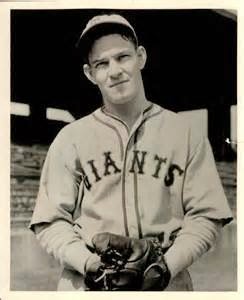
Bill Terry: Despite the above picture making you think otherwise, Bill Terry never cut up people and stored them in a meat locker. At least, no research I did seemed to indicated that.
Terry was the last National League player to hit .400 or better, hitting .401 in 1930 (naturally, he won the batting title that year as well). For his career he had a .341/.393/.506 line. He was selected to the first three All-Star games ever from 1933 to 1935 (near the end of his career, so imagine how many he would've made if the game existed earlier).
The Giants won the World Series in 1933 with Terry acting as a player/manager, the only time in his entire career with the team where they won the whole thing (the Giants won five pennants in Terry's stay with the team from 1923 to 1941). Terry was inducted into the Baseball Hall of Fame in 1954 and his number 3 jersey was retired by the team.
Terry was the last National League player to hit .400 or better, hitting .401 in 1930 (naturally, he won the batting title that year as well). For his career he had a .341/.393/.506 line. He was selected to the first three All-Star games ever from 1933 to 1935 (near the end of his career, so imagine how many he would've made if the game existed earlier).
The Giants won the World Series in 1933 with Terry acting as a player/manager, the only time in his entire career with the team where they won the whole thing (the Giants won five pennants in Terry's stay with the team from 1923 to 1941). Terry was inducted into the Baseball Hall of Fame in 1954 and his number 3 jersey was retired by the team.
Mel Ott: Remember when Bryce Harper was doing really, really well and people were comparing him to other players who were great in their age 19 and 20 seasons? Mel Ott was the one people brought up the most.
He had a .326/.427/.586 line in his age 19 and 20 seasons. He hit 42 home runs when he was 20. He was really great almost immediately and stayed great for pretty much the rest of his career.
He went to 11-straight All-Star games. He led the NL in walks six times, and was in the top-three 16 times (you saw how high his OBP was, right?). He has the ninth-most walks in history, and is one of just 26 players to hit 500 or more home runs in his career (511).
He was inducted into the Baseball Hall of Fame in 1951 and the Giants retired his number 4 jersey.
He had a .326/.427/.586 line in his age 19 and 20 seasons. He hit 42 home runs when he was 20. He was really great almost immediately and stayed great for pretty much the rest of his career.
He went to 11-straight All-Star games. He led the NL in walks six times, and was in the top-three 16 times (you saw how high his OBP was, right?). He has the ninth-most walks in history, and is one of just 26 players to hit 500 or more home runs in his career (511).
He was inducted into the Baseball Hall of Fame in 1951 and the Giants retired his number 4 jersey.
Carl Hubbell: Meal Ticket! Hubbell was another dominant pitcher in team history, leading all of baseball in ERA three times in four years. He was twice named NL MVP, becoming the first two-time winner to have played for the Giants. And to top it all off, he went to nine All-Star Games in ten seasons.
Fun fact: after his playing career, Hubbell worked for the Giants first as director of player development and then as a scout. He worked for the team for the remaining 45 years of his life, and was the last man to have played for the Giants while they were still in New York to still be working in baseball in some capacity.
He was inducted into the Baseball Hall of Fame in 1947, and his number 11 jersey was retired by the team.
Fun fact: after his playing career, Hubbell worked for the Giants first as director of player development and then as a scout. He worked for the team for the remaining 45 years of his life, and was the last man to have played for the Giants while they were still in New York to still be working in baseball in some capacity.
He was inducted into the Baseball Hall of Fame in 1947, and his number 11 jersey was retired by the team.
Willie Mays: The Say Hey Kid! Here's a reference for just what he accomplished in his career: He was the third player ever to hit 600 home runs (660 total, which ranks fourth in history). He was named NL Rookie of the Year in 1951. He won two MVPs 11 years apart. Had 3,283 hits, 338 stolen bases, 12 Gold Gloves, and went to 20-straight All Star Games (and played in 24, since there were two games played from 1959 to 1962). Shockingly, he's considered one of the greatest players to ever play baseball.
He was inducted into the Baseball Hall of Fame in 1979 in his first year of eligibility. His number 24 jersey was also retired by the Giants.
He was inducted into the Baseball Hall of Fame in 1979 in his first year of eligibility. His number 24 jersey was also retired by the Giants.
Orlando Cepeda: Baby Bull! Cepeda won the NL Rookie of the Year in 1958 and was runner up MVP in 1961 (he won the MVP in 1967, but he was with the Cardinals by then). He went to 10 All Star Games from 1959 to 1964 (two games a year strikes again!). He had really solid stats, but didn't have the over-the-top numbers that screamed "hall of famer," even though you could argue he certainly was worthy of the honor. It took until 1999 before he was finally inducted, but he is in the hall nonetheless. His number 30 jersey was also retired by the team.
Willie McCovey: Another guy in the 500 home run club (he hit 522 in his career, 469 with the Giants). McCovey played in four different decades- he was named NL Rookie of the Year in 1959, played in the 60s and 70s and retired after the 1980 season. 19 of his 22 seasons were with the Giants, and he stayed in California with short stays with the A's and Padres. McCovey also won the 1969 NL MVP. He was inducted into the Baseball Hall of Fame in 1986, his first year of eligibility, and his number 44 jersey was retired by the team.
Juan Marichal: A fantastic pitcher with a sublime 2.89 career ERA. Marichal was one half of the the Greatest Game Ever Pitched- a July 2, 1963 duel with Braves great Warren Spahn. Marichal pitched 16 innings, fanned 10 batters and most importantly, got the win (Spahn was equally impressive, but this isn't a Braves retrospective).
Unfortunately for Marichal, in spite of his great career, he's probably best known for helping incite a brawl between his Giants and the hated Dodgers, when he began beating the crap out of John Roseboro. That incident is pointed at for why he didn't go into the Baseball Hall of Fame the second he became eligible (much to John Roseboro's pleas to give him a second chance- the two had made peace a few years earlier and are still on good terms to this day). Marichal did eventually go in in 1983. Hius number 27 jersey was also retired by the Giants.
Unfortunately for Marichal, in spite of his great career, he's probably best known for helping incite a brawl between his Giants and the hated Dodgers, when he began beating the crap out of John Roseboro. That incident is pointed at for why he didn't go into the Baseball Hall of Fame the second he became eligible (much to John Roseboro's pleas to give him a second chance- the two had made peace a few years earlier and are still on good terms to this day). Marichal did eventually go in in 1983. Hius number 27 jersey was also retired by the Giants.
Gaylord Perry: I know, I know. Perry is a really funny name. Get your heads out of the gutter.
Perry played for a million years for a million different teams, but he spent the most time with the Giants- a full ten seasons. He had a 2.96 ERA with the Giants and over 1,600 strikeouts then. He finished his career with 3,534 K's and was in a three-way race with Nolan Ryan and Steve Carlton to see who would break Walter Johnson's career strikeout record (though all three passed Johnson, Perry was a clear and distant third in the race).
Perry was a notorious spitballer- a fact he seemed to delight in brazenly wearing on his sleeve. The illegal maneuver likely helped him last as long as he did, though it's probably erroneous to think that he was successful specifically because he repeatedly broke the rules. He was clearly damn good. He was inducted into the Baseball Hall of Fame in 1991 and his number 36 jersey was retired by the Giants.
Perry played for a million years for a million different teams, but he spent the most time with the Giants- a full ten seasons. He had a 2.96 ERA with the Giants and over 1,600 strikeouts then. He finished his career with 3,534 K's and was in a three-way race with Nolan Ryan and Steve Carlton to see who would break Walter Johnson's career strikeout record (though all three passed Johnson, Perry was a clear and distant third in the race).
Perry was a notorious spitballer- a fact he seemed to delight in brazenly wearing on his sleeve. The illegal maneuver likely helped him last as long as he did, though it's probably erroneous to think that he was successful specifically because he repeatedly broke the rules. He was clearly damn good. He was inducted into the Baseball Hall of Fame in 1991 and his number 36 jersey was retired by the Giants.
Bobby Bonds: A largely-forgotten great whom had a pretty good career overall. Not hall of fame worthy by any stretch, but a good career.
Bonds spent half of his 14-season career with the Giants, and had a couple runs at the NL MVP (placing fourth in 1971 and third in 1973). Two of his three All Star Game appearances came as a Giant. He had some nice power too, averaging about 26.5 home runs a year in San Francisco.
So yeah, good career. Though his most notable feat was fathering an even better baseball player, who we'll get to below.
Bonds spent half of his 14-season career with the Giants, and had a couple runs at the NL MVP (placing fourth in 1971 and third in 1973). Two of his three All Star Game appearances came as a Giant. He had some nice power too, averaging about 26.5 home runs a year in San Francisco.
So yeah, good career. Though his most notable feat was fathering an even better baseball player, who we'll get to below.
Will Clark: Will the Thrill! Also, NOT Bobby Bonds' son. Clark, for a brief time, was one of the best outfielders in baseball. He had a .302/.375/.507 line through his first five major league seasons and finished in the top five in MVP voting four times in his eight seasons with the Giants (he was the runner up in 1989 to teammate and fellow outfielder Kevin Mitchell).
Though injuries hampered Clark in later seasons, he still had a great career with a .303 batting average, 284 home runs, 2,176 hits, 937 walks and an OPS of .880. He's not eligible for the hall of fame, but don't be surprised if he one day makes it on a Veteran's Committee ballot.
This is a good look at what Clark meant to the Giants in the context in which he came up. This and this are both an equally good look at what an asshole he was/is. This is a more favorable look compared to the previous two, though when your greatest defense of a guy's backwards racial beliefs is that he was born in the south and 60 years too late, I wouldn't want you as my lawyer, just sayin'.
Barry Bonds: C'mon, like him or hate him, you know who he is. No one has hit more home runs in the history of baseball than Bonds (762). No one has drawn more walks either intentionally (688), or totally (2,558). He won five MVPs in San Francisco alone. Obviously, he's one of the poster boys of the steroid era, and thus his stats are tainted as a result. But its been said that 90% or more of players from the late 80s to the early 00s were likely taking steroids, pitchers included, and no one was putting up the numbers Bonds was. He should be in the hall of fame, but he likely won't get in for another two decades at least.
Jeff Kent: Perhaps the best offensive second baseman the game has ever seen. Kent spent six season with the Giants, winning the NL MVP in 2000 from under teammate Barry Bonds. One of the many reasons, i'm sure, that Bonds later slugged Kent in the clubhouse.
Kent, it must be noted, was perhaps the biggest asshole in baseball during his career. A pretty big accomplishment considering, again, he was teammates with Barry Bonds for a long time. Kent never seemed to like anyone who wasn't directly related to him. But to be fair, no one seemed to like him very much either.
Kent's not in the hall of fame, but he's still eligible as of this writing. He's a borderline inductee to me, and hell, isn't that the most important thing to you?
Kent, it must be noted, was perhaps the biggest asshole in baseball during his career. A pretty big accomplishment considering, again, he was teammates with Barry Bonds for a long time. Kent never seemed to like anyone who wasn't directly related to him. But to be fair, no one seemed to like him very much either.
Kent's not in the hall of fame, but he's still eligible as of this writing. He's a borderline inductee to me, and hell, isn't that the most important thing to you?
Five Current Guys You Should Know
Bruce Bochy: The big skip himself. Bochy got his managerial start with the Giants' division rivals the San Diego Padres (in fact, he's the Padres' all-time winningest manager). He moved up the coast to coach the Giants in the waning days of the Barry Bonds era, and a few years later, the Giants were back in the postseason hunt. Bochy has won 667 as Giants manager and his 34 postseason wins are the most in team history. He's tied with John McGraw with the most World Series wins as team manager with three. And he just signed a contract extension through 2019. It's good to be Bruce Bochy.
Tim Lincecum: The Freak! Lincecum got off to a hot start, winning back-to-back Cy Young Awards in 2008 and 2009. He went to four-straight All Star Games from 2008 to 2011, and had an ERA below 3.00 in three out of four of those years. Since that time, he hasn't been anywhere near as effective (in fact, he's been outright bad as a starter), though he has been good in a reliever/closer role on occasion.
Madison Bumgarner: He doesn't have a funky nickname, though he may not need one. Frankly, he's more worthy of the freak name than Lincecum at this point.
Bumgarner has been exceptional since coming up, owning a 3.06 ERA in the regular season. He's struck out at least 191 batters since 2011, and has made two consecutive All Star Games in the last two seasons.
But it's the postseason where he's really cut his teeth. He has a 0.25 ERA in World Series play (NOT a typo), which is the lowest ERA for any pitcher in the history of the Fall Classic. He's simply stunning to watch and, barring some unforeseen circumstance, will be for years to come.
Bumgarner has been exceptional since coming up, owning a 3.06 ERA in the regular season. He's struck out at least 191 batters since 2011, and has made two consecutive All Star Games in the last two seasons.
But it's the postseason where he's really cut his teeth. He has a 0.25 ERA in World Series play (NOT a typo), which is the lowest ERA for any pitcher in the history of the Fall Classic. He's simply stunning to watch and, barring some unforeseen circumstance, will be for years to come.
Buster Posey: The Giants' catcher extraordinaire. Posey won the NL Rookie of the Year in 2010 and two years later won the the NL MVP. He's a pretty good hitter for a catcher, with a career average of .308 thus far. He led baseball with a .336 batting average in 2012 (hence the aforementioned MVP), and he's hit over .300 three times. He's made two All Star games and that number will likely increase in the coming years.
Joe Panik: A key defensive infielder for the team. Panik got called up permanently in late June last year, and while he ingratiated himself well with his bat (he hit .305/.343/.368), it was with his glove that he made a name for himself. Specifically, this play in Game 7 of the World Series that was a key momentum shift in the Giants' favor. Panik was pretty good defensively all year, which is good, because second base was a major weakness for the Giants in 2014 before he got called up and got comfortable. If he continues on his pace from last year, the Giants are going to be tough in their infield.
***
That'll do it for our look at the defending champs. They'll kick things off on Monday, but will they have another magical postseason when it's all said and done? We'll all find out in November.
Saturday, February 7, 2015
NO RINGS FOR YOU: 1967-1979 LOS ANGELES RAMS
It's hard to win a championship in any sport.
Many great teams from the past didn't come away with any trophies to
show for it. With that in mind, let's take a look at one of the truly
great teams that never won a championship: the late 60s and 70s Los Angeles Rams.

Before the Greatness
The Rams were the first NFL team to play in Los Angeles. (There had been the earlier Los Angeles Buccaneers in 1926, but they were purely a road team. Not surprisingly, a team that never got revenue from a home crowd only lasted one season.) The Rams were dominant in the late-40s up to the mid-50s, going to four NFL Championship Games from 1949 to 1955 and winning one.
After that, the Rams very quickly took a trip to bad team hell. They finished dead last in the Western Division in 1956 and had just one winning season in the decade following their last trip to the championship game. Slowly but surely, the Rams began to build a great team, hiring the great George Allen as coach and acquiring such players as Roman Gabriel, Deacon Jones, Merlin Olsen and many others. By the late-60s, the Rams were poised to make a run for a title.
What Was So Great About Them?
This picture says it all:

These jolly, happy souls were (L-R) Merlin Olsen, Deacon Jones, Lamar Lundy and Rosey Grier (seated). Together, they made up the Rams' starting defensive line from 1963 to 1966. Dubbed the Fearsome Foursome, they wreaked havoc on opposing offenses across the NFL. Sure, they don't look like much in the above photo, but that's how they looked away from the gridiron. Here's how they looked on it:

Yeah, they stood up before the snap, THEN got in their proper stances. And for the time, they were HUGE. They were all 6'5'' or taller (Lundy was 6'7'') and except for Lundy, weighed between 270 and 284 pounds. Factor in that pretty much every opposing offensive lineman was smaller than them and weep, because they not only dominated most of the time, they flat-out crushed teams.
Of course, the line-up I mentioned is actually a misnomer for the era I'm talking about. Grier retired after the 1966 season and was replaced by both Roger Brown and Diron Talbert (yeah, he was so good, he needed two guys to replace him). Ultimately, the line was broken up shortly after George Allen was dismissed following the 1970 season.
But the line became Fearsome AGAIN, this time with Merlin Olsen being the savvy veteran rather than the pupil. Jack Youngblood, Fred Dryer and Larry Brooks made up the new line and were also dominant in this era.
So to sum up, the Rams of this era were awesome thanks to their dominant defense, particularly on the line. Eight of the top ten defenses in team history in terms of points allowed per game fit into the 67-79 window.
How Good Were They?
Between 1967 and 1979, the Rams won 130 games. Only the Cowboys and Raiders won more games during this time. The Rams made the playoffs nine times in 13 tries, winning their division nine times, including seven straight from 1973 to 1979 (an NFL record that stands to this day). The team won 11 or more games five times, four of those happened when the NFL only had a 14-game schedule. The Rams also made five NFC Conference Championship Games from 1974 to 1979 and went to one Super Bowl.
39 players were selected to at least one Pro Bowl and 13 made 1st Team All-Pro at least once. Five former players in this era were later inducted into the Pro Football Hall of Fame.
So Why Didn't They Win Any Championships?
The Rams were a great team, but they weren't the only great team in the NFC during this era. The Dallas Cowboys and Minnesota Vikings teams of the 70s were the collective banes of the Rams' existence. The Rams lost nine playoff games from 1967 to 1979, seven of those loses were to either the Cowboys or Vikings. If they could beat one of them, they'd lose to the other in the next round.
The Rams were very much the third best team in the conference for a simple reason- while they had a great defense just like the Cowboys and Vikings, the Rams didn't have great offenses. The Cowboys had Roger Staubach at quarterback and had reliable running games before Tony Dorsett (and when they got Dorsett, they had an elite running game). The Vikings had Fran Tarkenton, one of the greatest quarterbacks in NFL history, and a pretty underrated rushing attack led by Chuck Foreman.
While the Rams had a very good running back in Lawrence McCutcheon (who made five Pro Bowls in his career), their passing attack left a lot to be desired. Here are the quarterbacks that started at least one game for the Rams from 1967 to 1979 in chronological order:
Roman Gabriel
Pete Beathard
John Hadl
James Harris
Ron Jaworski
Pat Haden
Joe Namath
Vince Ferragamo
Jeff Rutledge
Just looking at that list, there are some pretty impressive names there. If you dig a little deeper, suddenly, it's not so great.
Gabriel and Hadl were the best quarterbacks for the Rams during this time. Gabriel is one of the truly underrated quarterbacks of the 60s and 70s and is a dark-horse Hall of Fame candidate in my opinion. Unfortunately, the team cut him loose after the 1972 season (he was 32 and it was probably the right choice, but he still had some stuff left, going to the Pro Bowl in 1973 with the Eagles).
Hadl spent one full season with the Rams and was selected 1st Team All-Pro in 1973. But Hadl was also old (33 in his first season with the Rams) and that 1973 season was very much an anomaly for him as it was the only season in his career where he threw twice as many touchdowns as interceptions (being generous, he was the Brett Favre of the 60s, throwing a shitload of picks but also throwing for a ton of yards). He was dealt to the Packers in the middle of the 1974 season.
Harris and Haden both went to Pro Bowls, but were otherwise unspectacular. Jaworski eventually became a good quarterback, but that was in the 80s when he was on the Eagles. Namath was beyond washed up and started just four games in 1977, the last season of his career. Beathard and Rutledge were used mostly as backups.
That leaves Ferragamo. And irony of ironies, he quarterbacked the worst Rams team of this era, yet the team still made it to the Super Bowl. The Rams, a 9-7 division winner, beat the Dallas Cowboys on the road and shut out the unlikely-playoff-host Tampa Bay Buccaneers to make their first ever Super Bowl, their first title game in nearly 25 years. Then they dove headfirst into the buzz-saw that was the Pittsburgh Steelers of the 70s.
In all honesty, the Rams played the Steelers extremely well in Super Bowl XIV. They were never down more than four points through the third quarter and had taken the lead or tied everything up three times in the game. At the end of the third quarter, the Rams led the Steelers 19-17.
The Rams outplayed the Steelers on the ground and only gave up one turnover to the Steelers' three. The Steelers were flagged for penalties six times while the Rams were only penalized twice.
But in the end, the Steelers scored two touchdowns in the fourth quarter to win their fourth Super Bowl in six years by a score of 31-19. What went wrong? Terry Bradshaw threw two touchdowns to three interceptions. (He won his second consecutive Super Bowl MVP, though honestly, John Stallworth probably deserved it more, with three catches for 121 yards and a touchdown.) Bradshaw however wasn't sacked once and threw for over 300 yards. Ferragamo on the other hand threw one touchdown and one pick, but only threw for 212 yards and was sacked four times. If there was any one thing that sunk the Rams that night, it was the fact that Ferragamo was under a ton of pressure and, frankly, wasn't all that great to begin with.
Aftermath
That was it for the Rams as far being legitimate contenders went. They went to two other NFC Championship Games in the 80s, but those teams weren't great and were dismantled both times by better teams (the more things change...). The Rams did finally win another championship, but not until after they moved away from Los Angeles (and Anaheim) and were based in St. Louis, Missouri.
But the Rams can hang their hats on the fact that they were still a force of a team for over a decade. They won more consecutive division titles than any team before or since. They boasted historically great defenses and big stars. They were a hard-hitting, imposing, gritty team right in the middle of showy, cosmetically-oriented Hollywood.
If the rest of the team had been as fearsome as its defense, maybe the Rams would have had more than one championship in Los Angeles.
The Rams were the first NFL team to play in Los Angeles. (There had been the earlier Los Angeles Buccaneers in 1926, but they were purely a road team. Not surprisingly, a team that never got revenue from a home crowd only lasted one season.) The Rams were dominant in the late-40s up to the mid-50s, going to four NFL Championship Games from 1949 to 1955 and winning one.
After that, the Rams very quickly took a trip to bad team hell. They finished dead last in the Western Division in 1956 and had just one winning season in the decade following their last trip to the championship game. Slowly but surely, the Rams began to build a great team, hiring the great George Allen as coach and acquiring such players as Roman Gabriel, Deacon Jones, Merlin Olsen and many others. By the late-60s, the Rams were poised to make a run for a title.
What Was So Great About Them?
This picture says it all:
Of course, the line-up I mentioned is actually a misnomer for the era I'm talking about. Grier retired after the 1966 season and was replaced by both Roger Brown and Diron Talbert (yeah, he was so good, he needed two guys to replace him). Ultimately, the line was broken up shortly after George Allen was dismissed following the 1970 season.
But the line became Fearsome AGAIN, this time with Merlin Olsen being the savvy veteran rather than the pupil. Jack Youngblood, Fred Dryer and Larry Brooks made up the new line and were also dominant in this era.
So to sum up, the Rams of this era were awesome thanks to their dominant defense, particularly on the line. Eight of the top ten defenses in team history in terms of points allowed per game fit into the 67-79 window.
How Good Were They?
Between 1967 and 1979, the Rams won 130 games. Only the Cowboys and Raiders won more games during this time. The Rams made the playoffs nine times in 13 tries, winning their division nine times, including seven straight from 1973 to 1979 (an NFL record that stands to this day). The team won 11 or more games five times, four of those happened when the NFL only had a 14-game schedule. The Rams also made five NFC Conference Championship Games from 1974 to 1979 and went to one Super Bowl.
39 players were selected to at least one Pro Bowl and 13 made 1st Team All-Pro at least once. Five former players in this era were later inducted into the Pro Football Hall of Fame.
So Why Didn't They Win Any Championships?
The Rams were a great team, but they weren't the only great team in the NFC during this era. The Dallas Cowboys and Minnesota Vikings teams of the 70s were the collective banes of the Rams' existence. The Rams lost nine playoff games from 1967 to 1979, seven of those loses were to either the Cowboys or Vikings. If they could beat one of them, they'd lose to the other in the next round.
The Rams were very much the third best team in the conference for a simple reason- while they had a great defense just like the Cowboys and Vikings, the Rams didn't have great offenses. The Cowboys had Roger Staubach at quarterback and had reliable running games before Tony Dorsett (and when they got Dorsett, they had an elite running game). The Vikings had Fran Tarkenton, one of the greatest quarterbacks in NFL history, and a pretty underrated rushing attack led by Chuck Foreman.
While the Rams had a very good running back in Lawrence McCutcheon (who made five Pro Bowls in his career), their passing attack left a lot to be desired. Here are the quarterbacks that started at least one game for the Rams from 1967 to 1979 in chronological order:
Roman Gabriel
Pete Beathard
John Hadl
James Harris
Ron Jaworski
Pat Haden
Joe Namath
Vince Ferragamo
Jeff Rutledge
Just looking at that list, there are some pretty impressive names there. If you dig a little deeper, suddenly, it's not so great.
Gabriel and Hadl were the best quarterbacks for the Rams during this time. Gabriel is one of the truly underrated quarterbacks of the 60s and 70s and is a dark-horse Hall of Fame candidate in my opinion. Unfortunately, the team cut him loose after the 1972 season (he was 32 and it was probably the right choice, but he still had some stuff left, going to the Pro Bowl in 1973 with the Eagles).
Hadl spent one full season with the Rams and was selected 1st Team All-Pro in 1973. But Hadl was also old (33 in his first season with the Rams) and that 1973 season was very much an anomaly for him as it was the only season in his career where he threw twice as many touchdowns as interceptions (being generous, he was the Brett Favre of the 60s, throwing a shitload of picks but also throwing for a ton of yards). He was dealt to the Packers in the middle of the 1974 season.
Harris and Haden both went to Pro Bowls, but were otherwise unspectacular. Jaworski eventually became a good quarterback, but that was in the 80s when he was on the Eagles. Namath was beyond washed up and started just four games in 1977, the last season of his career. Beathard and Rutledge were used mostly as backups.
That leaves Ferragamo. And irony of ironies, he quarterbacked the worst Rams team of this era, yet the team still made it to the Super Bowl. The Rams, a 9-7 division winner, beat the Dallas Cowboys on the road and shut out the unlikely-playoff-host Tampa Bay Buccaneers to make their first ever Super Bowl, their first title game in nearly 25 years. Then they dove headfirst into the buzz-saw that was the Pittsburgh Steelers of the 70s.
In all honesty, the Rams played the Steelers extremely well in Super Bowl XIV. They were never down more than four points through the third quarter and had taken the lead or tied everything up three times in the game. At the end of the third quarter, the Rams led the Steelers 19-17.
The Rams outplayed the Steelers on the ground and only gave up one turnover to the Steelers' three. The Steelers were flagged for penalties six times while the Rams were only penalized twice.
But in the end, the Steelers scored two touchdowns in the fourth quarter to win their fourth Super Bowl in six years by a score of 31-19. What went wrong? Terry Bradshaw threw two touchdowns to three interceptions. (He won his second consecutive Super Bowl MVP, though honestly, John Stallworth probably deserved it more, with three catches for 121 yards and a touchdown.) Bradshaw however wasn't sacked once and threw for over 300 yards. Ferragamo on the other hand threw one touchdown and one pick, but only threw for 212 yards and was sacked four times. If there was any one thing that sunk the Rams that night, it was the fact that Ferragamo was under a ton of pressure and, frankly, wasn't all that great to begin with.
Aftermath
That was it for the Rams as far being legitimate contenders went. They went to two other NFC Championship Games in the 80s, but those teams weren't great and were dismantled both times by better teams (the more things change...). The Rams did finally win another championship, but not until after they moved away from Los Angeles (and Anaheim) and were based in St. Louis, Missouri.
But the Rams can hang their hats on the fact that they were still a force of a team for over a decade. They won more consecutive division titles than any team before or since. They boasted historically great defenses and big stars. They were a hard-hitting, imposing, gritty team right in the middle of showy, cosmetically-oriented Hollywood.
If the rest of the team had been as fearsome as its defense, maybe the Rams would have had more than one championship in Los Angeles.
Saturday, January 31, 2015
SUPER BOWL 49 PREVIEW AND PREDICTION
It's Super Bowl Sunday tomorrow. So let's check out the two teams that will be playing in the big game: the New England Patriots and Seattle Seahawks. But first, here's how I did predicting the Conference Championship Games, because that's clearly the most important detail in this article.
Conference Championship Record: 2-0 (1.000)
Total Playoff Record: 8-2 (.800)
There! Now, just who are these teams?
The Seahawks are the first team to go to back-to-back Super Bowls since the 2003-2004 Patriots, ironically enough. Interestingly enough, who was the guy who was coaching the Patriots before Bill Belichick? Pete Carroll. Hmm...
Also interestingly, the Patriots are now tied with the Steelers and Cowboys for most Super Bowl appearances by a team in history with eight. Belichick has also tied Don Shula with the most Super Bowl appearances as a head coach in history with six. Tom Brady will be the first quarterback to play in six Super Bowls.
If I asked a random person on the street which team gained more total yards this year, the vast majority would erroneously pick the Patriots. Now, that number for the Seahawks is helped greatly by Marshawn Lynch, whereas the Patriots had a running back-by committee for much of the season.
The Seahawks' passing game is pretty lame statistically, but that doesn't mean Russell Wilson is a bad quarterback. Wilson threw 20 touchdowns to just 7 interceptions with a 63.1 completion percentage. He threw "only" 452 pass attempts (19th-most in 2014).
More significantly, Wilson hasn't had the best protection this year. Patriots quarterbacks, meanwhile, were only sacked 26 times. If the Patriots are going to win this game, they're going to have to pressure Wilson into taking sacks and turning the ball over. No easy task- both teams were at or near the top of the league in protecting the ball.
You have to go back to the late-60s, early-70s Minnesota Vikings in order to find defenses as dominant as these Seahawks. The Seahawks are the first team since those Vikings to lead the league in points allowed for three-straight seasons, and the first since those Vikings to lead the league in both points allowed and total yards allowed in consecutive seasons. So yeah, they're really, really good.
Beyond their historical greatness, the Seahawks were in the top five in all relevant team-defensive categories, except for turnovers and sacks. Oddly enough, the Seahawks and Patriots were both around the league average in sacks and turnovers.
The Patriots defense, as it has been for much of the last decade, was okay to bad, buoyed by their great offense (i.e. Tom Brady).
Shockingly, neither of these teams had to punt much. The Seahawks were one of the best teams in forcing opponents to punt (surprise, surprise). Aside from the Patriots having a really good field goal percentage, nothing really pops out on special teams; both teams are solid but not spectacular.
***
So with all that said, who do I got? Just like the Broncos last year, the Patriots haven't seen a defense the caliber of Seattle's all season. The only one that comes close was the Chiefs' (who beat both of these teams, by the way), but even then, the Chiefs allowed nearly two points more per game more than the Seahawks. That doesn't sound like a lot, but that can make all the difference in this game.
Seattle is a throwback team, built up by an elite running game and a dominant defense. Russell Wilson is a strong number two option in their offense, but he has the ability to be able take over games at the right times.
In the NFC Championship Game, Wilson was god-awful for roughly 85% of the game and the Seahawks were down 16-0 at the half against the Packers. The way they were playing, they're luck they weren't down 28-0. Or 32-0. The game could've gotten away from them completely with thirty minutes to go, but the defense "only" allowed 16 points.
In the second half, Marshawn Lynch took over and the defense continued to play great. Wilson came alive in the 4th and overtime, and that was all she wrote.
It's probably a mistake to completely discount the Patriots, and truthfully, a Patriots win wouldn't be a total shock. With that said, I don't think that will happen. This Seahawks team is more versatile than the Patriots, who have a great passing game and not much else. Against perhaps the best defense the NFL has seen in over a decade, if not longer, that's not going to get it done.
Pick: Seattle
Conference Championship Record: 2-0 (1.000)
Total Playoff Record: 8-2 (.800)
There! Now, just who are these teams?
|
NEW
ENGLAND PATRIOTS
|
GENERAL
|
SEATTLE
SEAHAWKS
|
|
Bill Belichick (20/15)
|
Head Coach (Yrs Exp/Yrs w/ Tm)
|
Pete Carroll (9/5)
|
|
AFC
|
Conference
|
NFC
|
|
East
|
Division
|
West
|
|
12-4
|
Record
|
12-4
|
|
1
|
Conference Rank
|
1
|
|
1960 (55)
|
First Season (Season #)
|
1976 (39)
|
|
8
|
# Super Bowl Appearance
|
3
|
|
3
|
Championships Won
|
1
|
|
XXXIX (2004)
|
Last Super Bowl Win (Season)
|
XLVIII (2013)
|
|
XLVI (2011)
|
Last Super Bowl Appearance (Season)
|
XLVIII (2013)
|
The Seahawks are the first team to go to back-to-back Super Bowls since the 2003-2004 Patriots, ironically enough. Interestingly enough, who was the guy who was coaching the Patriots before Bill Belichick? Pete Carroll. Hmm...
Also interestingly, the Patriots are now tied with the Steelers and Cowboys for most Super Bowl appearances by a team in history with eight. Belichick has also tied Don Shula with the most Super Bowl appearances as a head coach in history with six. Tom Brady will be the first quarterback to play in six Super Bowls.
|
NEW
ENGLAND PATRIOTS
|
OFFENSE
|
SEATTLE
SEAHAWKS
|
|
5,848 (11)
|
Total Offense (Rk)
|
6,012 (9)
|
|
4,121 (9)
|
Passing Yards For (Rk)
|
3,250 (27)
|
|
1,727 (18)
|
Rushing Yards For (Rk)
|
2,762 (1)
|
|
34 (5)
|
Passing Touchdowns For (Rk)
|
20 (22)
|
|
13 (T12)
|
Rushing Touchdowns For (Rk)
|
20 (1)
|
|
468 (4)
|
Points Scored (Rk)
|
394 (10)
|
|
13 (T1)
|
Turnovers Allowed (Rk)
|
14 (3)
|
|
26 (T4)
|
Sacks Allowed (Rk)
|
42 (T20)
|
|
361 (4)
|
First Downs Gained (Rk)
|
328 (14)
|
If I asked a random person on the street which team gained more total yards this year, the vast majority would erroneously pick the Patriots. Now, that number for the Seahawks is helped greatly by Marshawn Lynch, whereas the Patriots had a running back-by committee for much of the season.
The Seahawks' passing game is pretty lame statistically, but that doesn't mean Russell Wilson is a bad quarterback. Wilson threw 20 touchdowns to just 7 interceptions with a 63.1 completion percentage. He threw "only" 452 pass attempts (19th-most in 2014).
More significantly, Wilson hasn't had the best protection this year. Patriots quarterbacks, meanwhile, were only sacked 26 times. If the Patriots are going to win this game, they're going to have to pressure Wilson into taking sacks and turning the ball over. No easy task- both teams were at or near the top of the league in protecting the ball.
|
NEW
ENGLAND PATRIOTS
|
DEFENSE
|
SEATTLE
SEAHAWKS
|
|
5,506 (13)
|
Total Defense (Rk)
|
4,274 (1)
|
|
3,837 (17)
|
Passing Yards Allowed (Rk)
|
2,970 (1)
|
|
1,669 (9)
|
Rushing Yards Allowed (Rk)
|
1,304 (3)
|
|
24 (T12)
|
Passing Touchdowns Allowed (Rk)
|
17 (2)
|
|
6 (T2)
|
Rushing Touchdowns Allowed (Rk)
|
8 (T5)
|
|
313 (8)
|
Points Allowed (Rk)
|
254 (1)
|
|
25 (T14)
|
Turnovers Caused (Rk)
|
24 (T20)
|
|
40 (T13)
|
Sacks (Rk)
|
37 (20)
|
|
329 (22)
|
First Downs Allowed (Rk)
|
277 (1)
|
You have to go back to the late-60s, early-70s Minnesota Vikings in order to find defenses as dominant as these Seahawks. The Seahawks are the first team since those Vikings to lead the league in points allowed for three-straight seasons, and the first since those Vikings to lead the league in both points allowed and total yards allowed in consecutive seasons. So yeah, they're really, really good.
Beyond their historical greatness, the Seahawks were in the top five in all relevant team-defensive categories, except for turnovers and sacks. Oddly enough, the Seahawks and Patriots were both around the league average in sacks and turnovers.
The Patriots defense, as it has been for much of the last decade, was okay to bad, buoyed by their great offense (i.e. Tom Brady).
|
NEW
ENGLAND PATRIOTS
|
SPECIAL
TEAMS
|
SEATTLE
SEAHAWKS
|
|
37 (T4)
|
Field Goals Attempted (Rk)
|
37 (T4)
|
|
35 (1)
|
Field Goals Made (Rk)
|
31 (5)
|
|
94.6 (2)
|
Field Goal Percentage (Rk)
|
83.8 (17)
|
|
67 (T24)
|
Punt Attempts (Rk)
|
62 (T26)
|
|
37 (T25)
|
Field Goal Attempts Against (Rk)
|
24 (6)
|
|
29 (T19)
|
Field Goals Allowed (Rk)
|
21 (T6)
|
|
78.4 (5)
|
Opp. Field Goal Percentage (Rk)
|
87.5 (T25)
|
|
65 (26)
|
Punts Against (Rk)
|
83 (T6)
|
|
431 (5)
|
Punt Return Yards For (Rk)
|
252 (19)
|
|
693 (26)
|
Kick Return Yards For (Rk)
|
820 (17)
|
|
267 (17)
|
Punt Return Yards Allowed (Rk)
|
195 (7)
|
|
955 (19)
|
Kick Return Yards Allowed (Rk)
|
1,035 (22)
|
Shockingly, neither of these teams had to punt much. The Seahawks were one of the best teams in forcing opponents to punt (surprise, surprise). Aside from the Patriots having a really good field goal percentage, nothing really pops out on special teams; both teams are solid but not spectacular.
***
So with all that said, who do I got? Just like the Broncos last year, the Patriots haven't seen a defense the caliber of Seattle's all season. The only one that comes close was the Chiefs' (who beat both of these teams, by the way), but even then, the Chiefs allowed nearly two points more per game more than the Seahawks. That doesn't sound like a lot, but that can make all the difference in this game.
Seattle is a throwback team, built up by an elite running game and a dominant defense. Russell Wilson is a strong number two option in their offense, but he has the ability to be able take over games at the right times.
In the NFC Championship Game, Wilson was god-awful for roughly 85% of the game and the Seahawks were down 16-0 at the half against the Packers. The way they were playing, they're luck they weren't down 28-0. Or 32-0. The game could've gotten away from them completely with thirty minutes to go, but the defense "only" allowed 16 points.
In the second half, Marshawn Lynch took over and the defense continued to play great. Wilson came alive in the 4th and overtime, and that was all she wrote.
It's probably a mistake to completely discount the Patriots, and truthfully, a Patriots win wouldn't be a total shock. With that said, I don't think that will happen. This Seahawks team is more versatile than the Patriots, who have a great passing game and not much else. Against perhaps the best defense the NFL has seen in over a decade, if not longer, that's not going to get it done.
Pick: Seattle
Subscribe to:
Posts (Atom)